On 28 July 2026 the Minister for Primary Industries announced new Queensland drought declarations and the reinstatement of Drought Carry-on Finance Loans and Emergency Drought Assistance Loans for eligible Queensland primary producers. Full details of these loans will be available once administrative arrangements are finalised. Please monitor QRIDA’s website and social media channels for more information about when these loans will open to application and how to apply.
Image and text
Spring edition
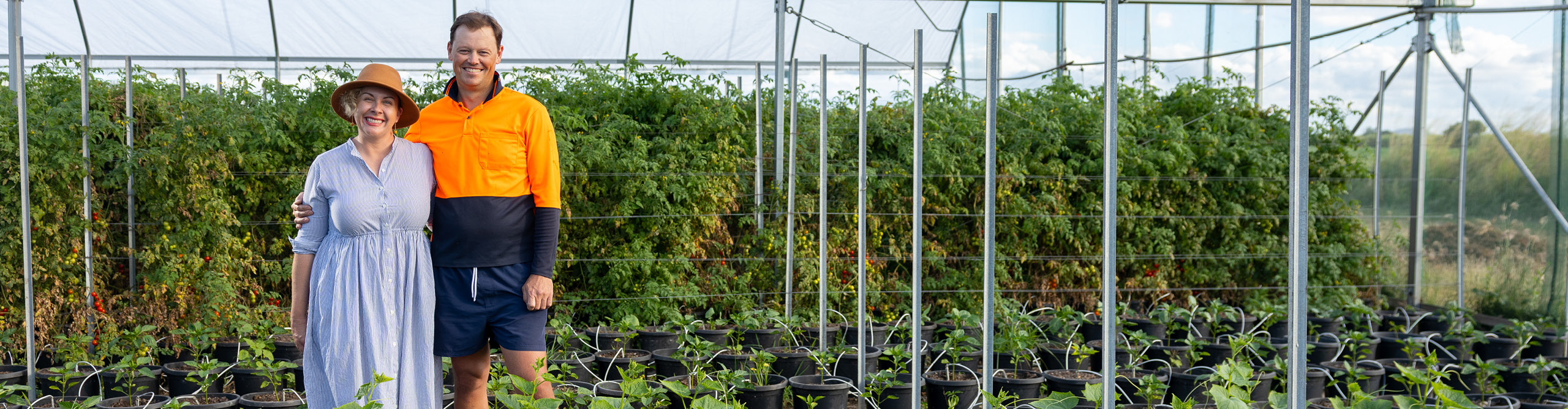
'Growing undercover' with a QRIDA First Start Loan
Bowen growers Luke and Jessica Volker of Lower Don Organics have expanded their farming operation after purchasing a larger property in early 2025 with support from a First Start Loan from QRIDA.
The purchase marked a major milestone for the couple as they transitioned from tree crops into full-time horticulture production.
“We used the First Start Loan to buy a second, larger property that we could grow more produce on and hopefully make our business viable in that area of land,” Jessica said.
Expanding onto larger acreage opened new opportunities for Luke and Jessica to grow their business and secure their future in farming. Today, the fields and shade houses on their property are flourishing with organic crops, including watermelons, cherry tomatoes, eggplants, beans, capsicums, and cucumbers.
The Volkers have also invested in protected cropping by setting up two shade houses filled with chemical-free produce.
Growing vegetables undercover has allowed them to extend their growing season by creating a cooler environment during summer, giving a competitive edge when temperatures rise and other growers are unable to produce.
“We want to use the shade houses for the hotter part of the year where we might burn fruit. We’re hoping that will give us a longer period of growing without too much damage to our produce,” Jessica said.
Before building the shade houses and planting crops, Luke and Jessica spent time crunching numbers and preparing their First Start Loan application. Luke shared while the process gave him a deeper understanding of their business finances.
“For the QRIDA First Start Loan, I did most of the data entry. I was learning how much I spend on certain aspects of the farm, particularly fertiliser and T-tape,” Luke said.
“I definitely have been thinking a lot more about the numbers, the financial data behind everything now since doing that [the First Start Loan application].”
Tegan McBride, QRIDA's Regional Area Manager for the Central Coast and Whitsundays, spoke of the Volkers’ potential.
“Looking at the economies of scale... they were certain that the next step was a little bit bigger for them, trying to maximise their growing space and potential sales into bigger markets,” Tegan said.
Designed to help the next generation of producers establish themselves in the industry, QRIDA’s First Start Loans offer up to $2 million to help aspiring growers in the initial years of establishing their primary production business. To find out more visit QRIDA's First Start Loans webpage.
Your feedback on the farm: visits highlight pest problem, ag-tech achievement
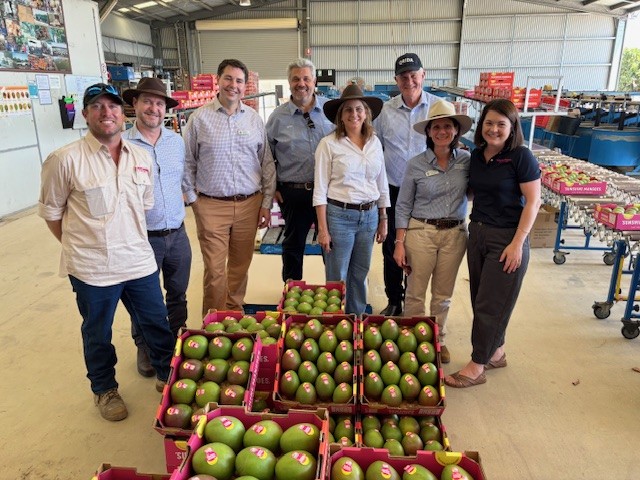 Ahead of the wet season, I recently visited North Queensland to meet with some of our primary producer clients and partners to hear directly about conditions on the ground, and make sure QRIDA’s financial assistance is meeting the needs of regional communities.
Joined by QRIDA Board directors and colleagues, I had the privilege of visiting producers across a range of industries who have used a QRIDA First Start Loan or Sustainability Loan to establish, grow or strengthen their operations.
With the first Burdekin mangoes being picked and the cane crush just finished, producers shared the opportunities and challenges they are navigating this season. These included canegrub, rising fuel and fertiliser costs, and ongoing workforce pressures such as the availability of harvesting contractors.
Insights like these are invaluable. They help ensure QRIDA continues to improve our financial assistance programs and respond to the real needs of Queensland primary producers.
Despite the pressures, it was encouraging to see so many producers pursuing new opportunities and achieving their goals, from paddock-to-plate businesses attracting strong local interest, to innovative redclaw hatchery technology. It was pleasing to see first-hand the role QRIDA’s support has played in helping these businesses move forward.
In the south-east, storms and bushfires have already affected some communities, marking the start of Queensland’s high-risk weather season. If you have not already done so, I strongly encourage you to prepare your family, property and primary production business for potential disasters.
While we continue to promote preparedness, we're also supporting communities with long-term recovery from monsoon, flooding and cyclone events over recent years. If you need help with a disaster financial assistance application, our team is here to support you.
Personalised support is available via virtual QRIDA Connect sessions. To find out more, visit QRIDA's Disaster Recovery Connect webpage, or call 1800 623 946 to book an appointment.
As 2026 draws to a close, thank you for trusting QRIDA to support your farm business this year. I wish you, your family and your team a safe and happy festive season.
Pictured above: North Queensland mango growers, Paul and Kayla Castorina; QRIDA Board Directors, Jason Kidd, Ari McCamley, Danica Olsen, and Bruce Vandersee; QRIDA Regional Area Manager for North Queensland, Angelo Rigano; and QRIDA Chief Executive Officer, Brooke Irwin.
Brooke Irwin
QRIDA Chief Executive Officer
Queensland Rural Debt Survey 2025 now available
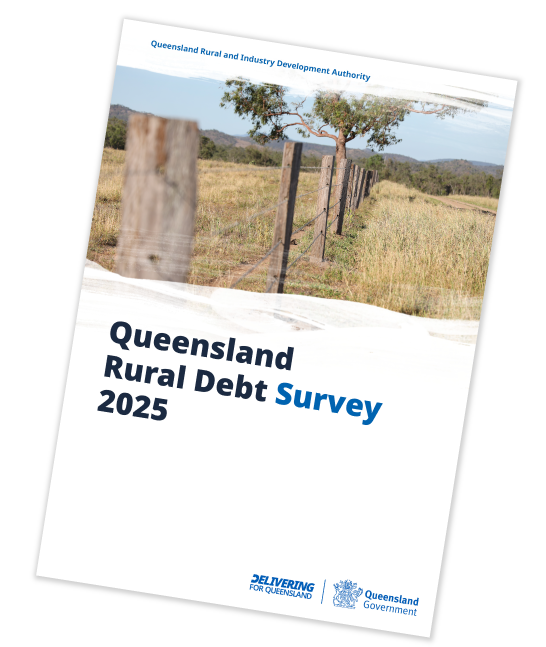
In September 2026, QRIDA released the Queensland Rural Debt Survey 2025, developed in collaboration with the Queensland Government Statistician’s Office (QGSO). The survey draws on data from Queensland’s major rural lending institutions and insights from key industry bodies.
Under the Rural and Regional Adjustment Act 1994 (Qld) and the Farm Debt Mediation Act 2017 (Qld), QRIDA must undertake a rural debt survey in Queensland every two years. The survey plays an important role in shaping government and industry policy for primary production enterprises and highlights the resilience of the state’s rural sector.
For more information visit QRIDA's Queensland Rural Debt Survey webpage.
Disaster preparedness and looking beyond the emergency kit
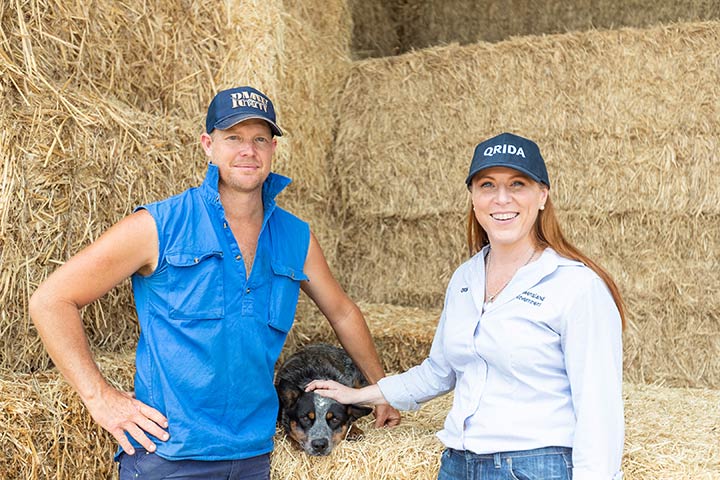
If your Queensland primary production operation is only just starting to think about disaster recovery after an extreme weather event has already happened you might already be behind.
Depending on the impacts of a disaster, financial assistance for recovery may become available to your farm business through QRIDA.
QRIDA Disasters and Drought Manager, Sheree Finney, says there’s key steps you should take even before recovery grants and loans have been activated.
“While it’s essential to pack an emergency kit, create an evacuation plan, and secure your property, there’s other important disaster preparedness steps that your primary production operation might overlook,” Sheree said.
“This includes getting supporting evidence ready before a disaster that will be needed for any QRIDA disaster financial assistance application.
“This supporting evidence includes pre-disaster photos of infrastructure and equipment, personal identification documents, rates notices or lease agreements, financial documents, and insurance details.”
Sheree also encourages primary producers to create or review their business continuity plan and consider potential disruptions.
“As a disaster looms, you generally know to move livestock to higher ground and secure major equipment and infrastructure, but you may forget to create a post-disaster biosecurity plan, confirm evacuation routes for seasonal farm workers, and secure fuel supplies for your back-up generator which are all also important,” Sheree said.
For more information, visit QRIDA's Disaster Preparedness webpage.
Pictured above: Lockyer Valley dairy producer and disaster recovery grant recipient, Luke Stock, with QRIDA Disasters and Drought Manager, Sheree Finney.
Our team in regional Queensland, helping yours
QRIDA has a network of Regional Area Managers (RAMs) based throughout Queensland who can provide you with the latest local knowledge and expertise on our programs and services.
With offices located in Brisbane, Bundaberg, Charters Towers, Emerald (with regular visits to Longreach), Innisfail, Kingaroy, Mackay, Rockhampton, Roma, Toowoomba and Townsville, we've got Queensland covered.
In each newsletter we feature an update from three of our RAMs. To find details of your local RAM, contact us on 1800 623 946 or visit the Your Region webpage where you can search by region or postcode.
Angelo Rigano, North
Image
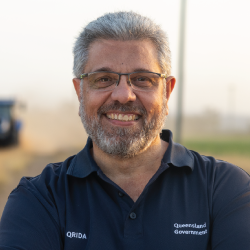
Following valued feedback about QRIDA’s services received from our 2026 Client Satisfaction Survey, it was great to continue these conversations with primary producers and QRIDA’s Board on farms across our patch. True to North Queensland, the First Start Loan and Sustainability Loan clients who kindly hosted us were from varied industries including wagyu, cane, mango and crayfish. Gathering in these fields and orchards, our Board listened firsthand to clients' perspectives as QRIDA continuously works to improve every producer’s experience with us.
Having been there with many of these producers from the start of their QRIDA journeys, it is incredibly rewarding to see the progress they’ve made towards goals they once put on paper. They’re just a few of the wonderful clients we have supported through QRIDA’s financial assistance.
It’s important I remind you to get ready for the upcoming disaster season – know your risk, make a plan, and pack a kit. I also encourage you to visit QRIDA’s disaster preparedness webpage for information about how to prepare and what to do if QRIDA disaster assistance is activated.
To find out more about the support available, you can get in touch with me and we can even arrange a time to meet to go through your application(s).
Dayna Linton, North West & Gulf
Image
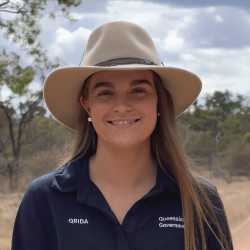
I’m excited to be QRIDA’s new Regional Area Manager for the North West and Gulf.
Since I joined in August, I’ve loved meeting with several of you about your primary production operations at events including the Young Beef Producer’s Forum in Roma and the Hughenden Bull Sale.
These events were especially exciting for me as the fifth generation of my family’s cattle and cane operation. I’ve learnt a lot on the farm feeding, processing and mustering cattle, and I hope you’ll find we can relate to each other through our shared experiences on the land.
I also have a number of years of rural banking experience, and I'm keen to help you with your QRIDA financial assistance queries.
I'm based in Charters Towers, but I love to get out on the road for events and farm visits, or I can also help you virtually via a QRIDA Connect session.
Please get in touch with me to arrange a time to meet and discuss how I may be able to support you.
Bradley Whittington, Central Highlands & West
Image
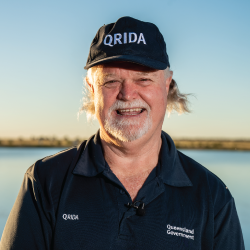
As the weather warms up, so does our disaster season in the Central Highlands and West. In October, parts of the region already experienced severe storms and flash flooding, showing it’s best to be prepared and have a plan in place early.
If you run a farm, business, or non-profit organisation, simple steps now can make a big difference if storms, floods, or bushfires hit. Tidy up your property to remove anything that could cause problems in bad weather and fix anything that’s worn out or broken. Check that your insurance is up to date and that you know what it covers. Make sure you have an emergency plan for your family, staff, or volunteers, and keep an emergency kit where you can find it quickly.
Think about what you’d do if the power goes out or phones don’t work. Store important papers, like ID and insurance details, somewhere safe—and back them up if you can. If you need help after a disaster, you’ll need things like photos of any damage, your ID, property papers, and financial details.
For more information, check the QRIDA website or get in touch with me.
Previous editions
Missed out on a previous copy of Prime Focus? Read past editions here:
2026
Winter 2026 (PDF 1,293KB) | Autumn 2026 (PDF 876KB) | Summer 2026 (PDF 960KB)
2025
Spring 2025 (PDF 972KB) | Winter 2025 (PDF 1.1MB) | Autumn 2025 (PDF 1,032KB) | Summer 2025 (PDF 1,582KB)
2024
Spring 2024 (PDF 1,849KB) | Winter 2024 (PDF 1,681KB) | Autumn 2024 (PDF 1,650 KB) | Summer 2024 (PDF 1,582KB)
2023
Spring 2023 (PDF 1,906KB) | Winter 2023 (PDF 1,386KB) | Autumn 2023 (PDF 1,406KB) | Summer 2023 (PDF 654KB)
2022
Spring 2022 (PDF 618KB) | Winter 2022 (PDF 708 KB) | Autumn 2022 (PDF 577 KB) | Summer 2022 (PDF 537 KB)
2021
Spring 2021 (PDF 655 KB) | Winter 2021 (PDF 626KB) | Autumn 2021 (PDF 602KB) |
2020
November 2020 (PDF 665KB) | May 2020 (PDF 561KB)
2019
December 2019 (PDF, 602KB) | July 2019 (PDF, 623KB) | March 2019 (PDF, 619KB)
Form